- Free Shipping on orders over PKR 1,999
- hairfindy@gmail.com
- +92 301 1781534


Most of us have been using the same hair brush for years without ever asking whether it suits our hair. Then we wonder where the frizz, the snapped ends and the painful tangles come from.
The fix is simpler than it sounds: match the tool to the job. A detangling brush handles knots and damp hair. A paddle brush smooths long, straight or wavy hair. A round brush gives volume while blow-drying. A cushion or bristle brush is for gentle everyday smoothing. And for curls and wet hair, a wide-tooth comb often beats every brush.
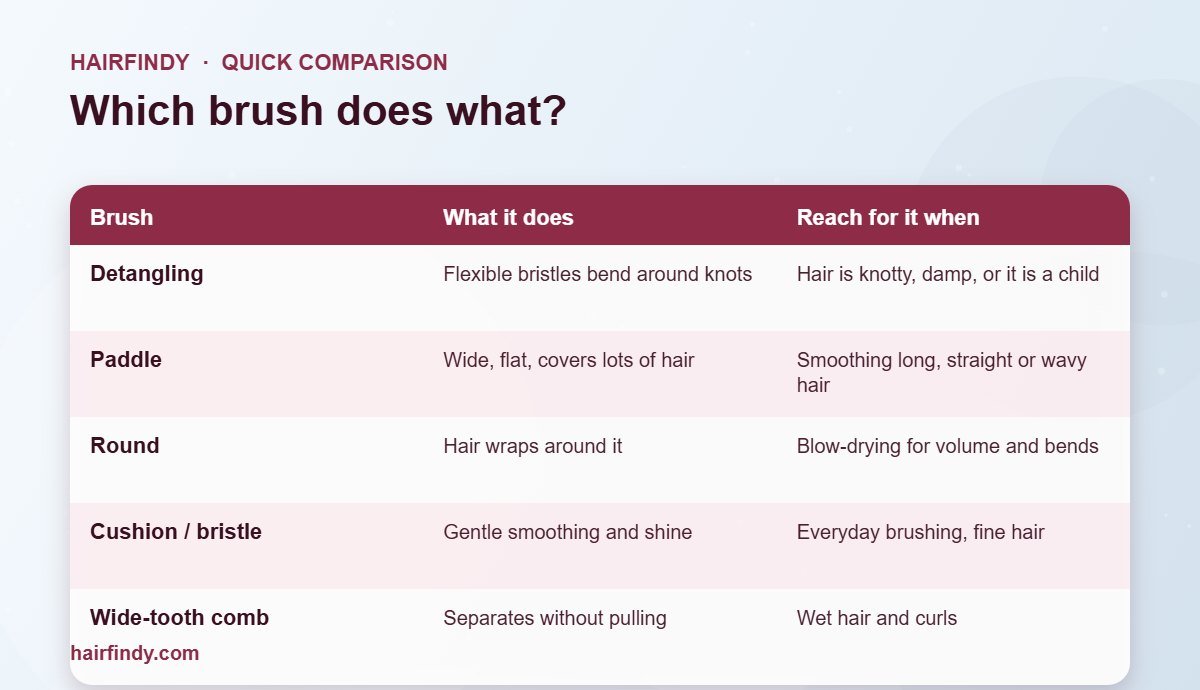
Its bristles are flexible, so they bend around knots instead of ripping through them. Brilliant for tangle-prone hair and for kids who dread hair-brushing time.
Wide and flat, it gets through a lot of hair quickly. Ideal for smoothing long, straight or wavy hair.
Your hair wraps around it as you blow-dry, which creates volume and soft bends at the ends.
The everyday smoothers. Bristle brushes help spread your hair’s natural oils and add shine, and they’re especially nice on fine to medium hair.
Vent brushes let air through for faster blow-drying. Teasing brushes have tight, narrow bristles for adding height at the crown before an updo.
| Your hair | Best bet | Good to know |
|---|---|---|
| Straight | Paddle or cushion brush | A bristle brush adds shine to fine hair |
| Wavy | Detangling brush or wide-tooth comb on damp hair | Brushing dry waves can cause frizz |
| Curly | Fingers or a wide-tooth comb on wet, conditioned hair | Brushing dry curls breaks up the pattern |
| Thick | Sturdy paddle or detangling brush | Work in sections |
| Fine or thin | Soft cushion or bristle brush | Stiff, tight bristles can pull |
| Kids | Detangling brush or wide-tooth comb | Start at the ends and work up |
Carefully, if at all. Wet hair stretches and breaks more easily. The American Academy of Dermatology lists rough brushing of wet hair among the everyday habits that can damage hair and suggests a wide-tooth comb instead. If you do use a brush on damp hair, pick a flexible detangling one and start from the ends.
You’ll probably want both. Combs are precise and gentle, perfect for wet hair, parting and curls. Brushes are faster for smoothing and styling. Our comb sets, like the 6-Piece Professional Hair Comb Set and the Hair Comb Set – Pack of 6, give you several comb types in one go.
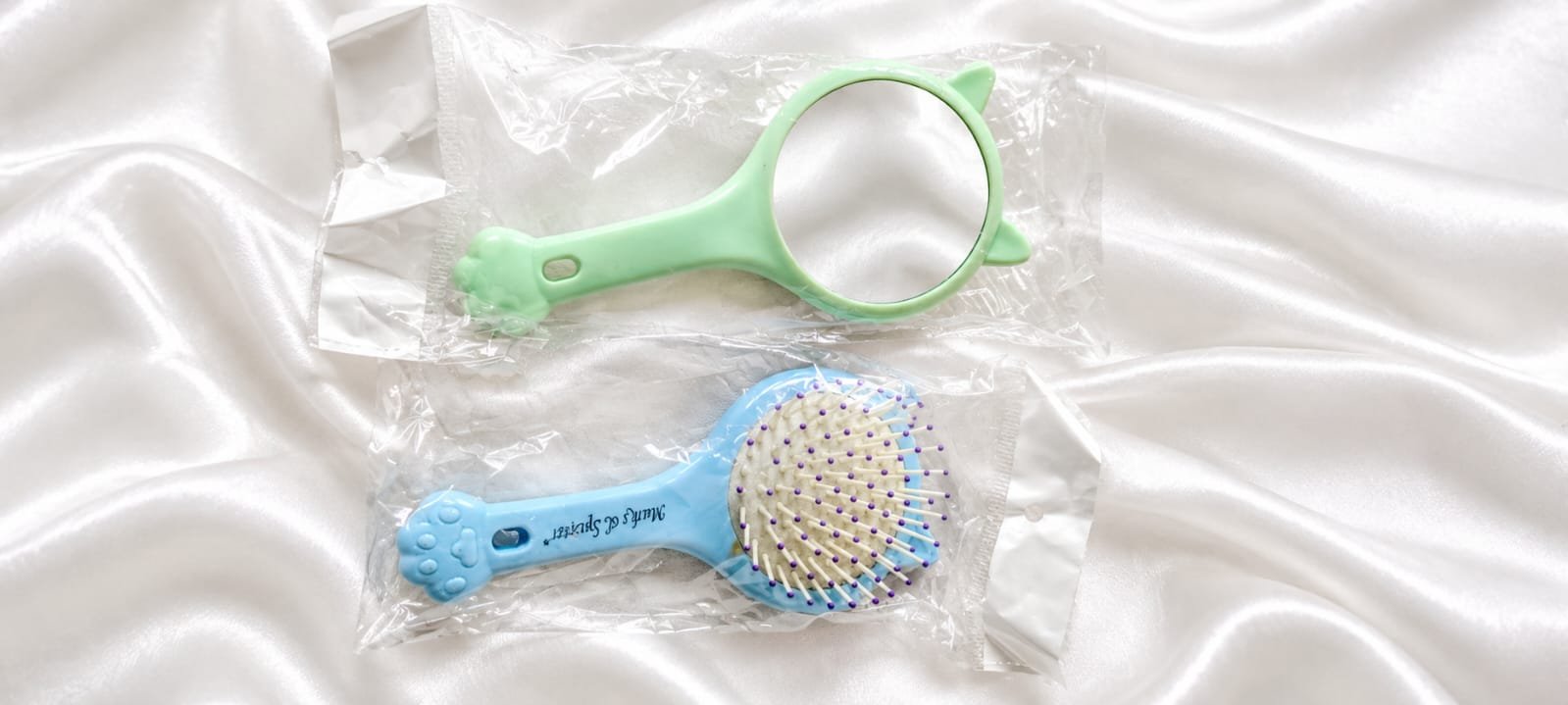
There’s no fixed timeline. Replace it when bristles are bent, missing or have lost their little protective tips, or when the cushion has cracked. Damaged bristles snag and break hair.
Wooden brushes shouldn’t be soaked. Just wipe them with a damp cloth.
For tangles, a detangling brush. For smoothing long, straight hair, a paddle brush. For blow-dry volume, a round brush. For curls and wet hair, a wide-tooth comb is often gentlest.
Be gentle, because wet hair is more fragile. A wide-tooth comb or a flexible detangling brush is a better choice than a stiff brush.
When the bristles are bent, broken or missing their tips, or the cushion is damaged.
Neither wins every time. Combs are gentler on wet hair and curls; brushes are quicker for smoothing and styling.
Source: American Academy of Dermatology, 10 hair care habits that can damage your hair.
Ready for a gentler routine?