
- Free Shipping on orders over PKR 1,999
- hairfindy@gmail.com
- +92 301 1781534


Somewhere along the way, scrunchies stopped being a 90s throwback and became the thing everyone has on their wrist. And honestly, it makes sense. They’re comfy, they look nicer than a plain black elastic, and they’re kinder to your hair.
A scrunchie is just an elastic wrapped in gathered fabric, but that fabric is the whole point. It spreads the pressure and reduces friction, so you get fewer dents and less snagging than with a bare rubber band. Choose the fabric for your hair, the size for the style, and swap it out once the elastic stops springing back.
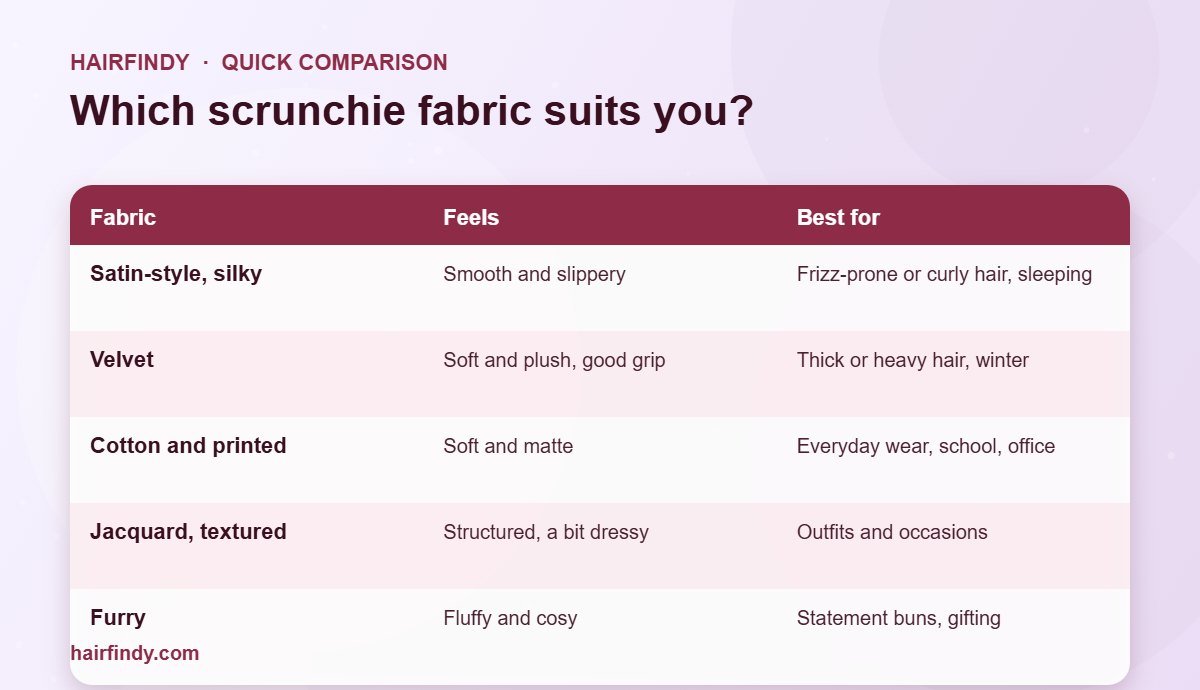
One thing worth knowing: “satin” describes how a fabric is woven, and it’s often polyester. “Silk” is a natural fibre. Both feel smooth, but they aren’t the same, so read the description if the material matters to you.
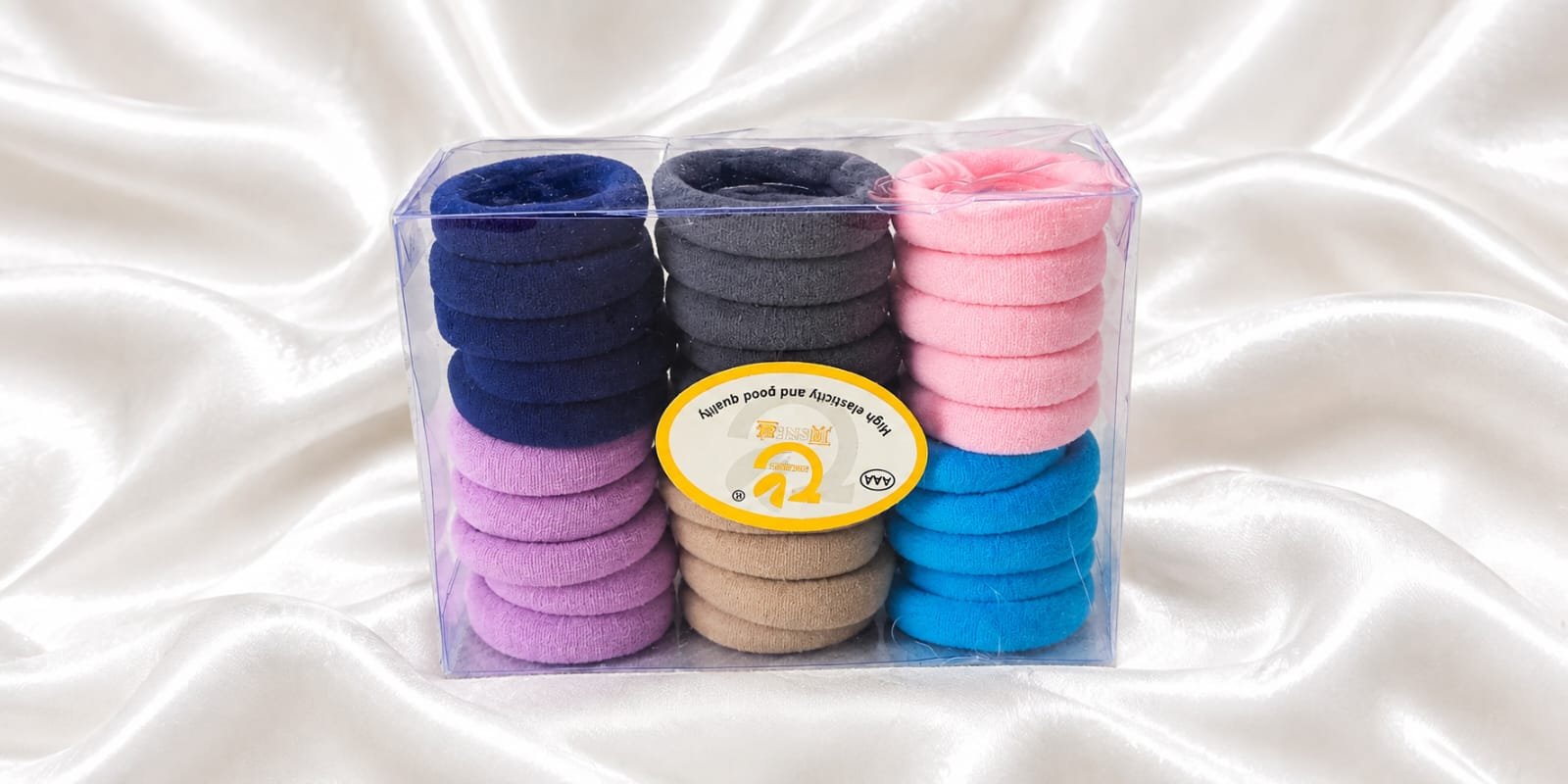
Generally, yes, compared with tight rubber bands or elastics with metal joins. But no hair tie is magic. The American Academy of Dermatology warns that styles which pull tightly on the hair, worn day after day, can lead to a type of hair loss called traction alopecia. So keep ponytails comfortable rather than tight, and move them around now and then instead of tying them in exactly the same spot every day.
Five or six covers most people: a couple of neutral everyday ones, one or two brighter ones for outfits, a smooth one for sleeping and one statement piece. If yours keep vanishing (whose don’t?), a multi-pack is better value.
Gift idea: a scrunchie pack is one of the easiest presents there is. See more in our gift ideas for girls.
They are generally gentler than bare elastics because the fabric reduces friction and spreads pressure. Just wear them comfortably, not tightly.
Smooth satin-style fabrics suit frizz-prone and curly hair, velvet and textured fabrics grip thick hair better, and cotton is great for everyday wear.
A loose, smooth scrunchie is one of the gentler ways to tie your hair at night. Avoid tight ponytails while you sleep.
Heat, stretching and washing all wear out elastic. Air-drying them and storing them unstretched helps them last longer.
Source: American Academy of Dermatology, Hairstyles that pull can lead to hair loss.
Time for a few new ones?




2 Responses